
Attachment Theory
How early bonds with caregivers create internal blueprints for relationships, emotion regulation, and the capacity to heal within the therapeutic relationship.
Key Theorists: John Bowlby, Mary Ainsworth, Mary Main

CEUs are being negotiated. Post-tests, certificates, and CE credit are not currently available.
Attachment Theory in Clinical Practice: Understanding and Healing Relational Trauma
Target Audience: Licensed mental health professionals (psychologists, clinical social workers, licensed professional counselors, marriage and family therapists)
This module provides a comprehensive overview of John Bowlby's attachment theory, a seminal framework for understanding the profound impact of early relational experiences on human development. We will explore the theory's origins, grounded in ethology and psychoanalysis, and its core tenets, including the innate attachment behavioral system that drives proximity seeking to a caregiver who provides a safe haven and secure base. The foundational contributions of Mary Ainsworth, particularly her groundbreaking 'Strange Situation' research that identified distinct attachment patterns ~ secure, anxious-ambivalent, and anxious-avoidant ~ will be examined in detail, laying the groundwork for understanding how these early dynamics shape internal working models of self and others.
The clinical application of attachment theory is particularly salient in the treatment of trauma. This module will illuminate how insecure and disorganized attachment styles, often rooted in developmental trauma, can manifest in clients' presenting problems and shape the therapeutic alliance. We will explore how the therapeutic relationship itself can serve as a corrective relational experience, providing the safety and attunement necessary for clients to begin repairing insecure internal working models. A key focus will be on understanding and working with disorganized attachment, a pattern identified by Main and Hesse, which is characterized by the 'fright without solution' dilemma where a caregiver is simultaneously a source of comfort and fear, a dynamic frequently seen in the histories of clients with complex trauma.
The evidence base for attachment-informed psychotherapy is robust and growing. This module will introduce clinicians to assessment tools such as the Adult Attachment Interview (AAI), which provides a framework for understanding a client's state of mind with respect to attachment. We will also explore the concept of 'earned security,' demonstrating that individuals can develop a secure attachment state in adulthood despite adverse early experiences. By completing this module, clinicians will deepen their ability to view clinical presentations through an attachment lens, assess clients' attachment patterns, and apply attachment-based interventions to foster healing and resilience in the therapeutic relationship, ultimately helping clients to build more secure and fulfilling connections.
Upon completion of this module, the learner will be able to:
- 1Describe the key principles of Bowlby's attachment theory, including the attachment behavioral system, monotropy, and the critical period.
- 2Differentiate between the four primary attachment styles as identified by Ainsworth and Main (secure, anxious-ambivalent, anxious-avoidant, and disorganized).
- 3Identify the role of internal working models in shaping an individual's perceptions, emotions, and behaviors in relationships.
- 4Apply the concepts of 'safe haven' and 'secure base' to the therapeutic relationship to foster a corrective emotional experience for clients with attachment-related trauma.
- 5Explain the concept of 'fright without solution' and its connection to disorganized attachment and complex trauma.
CEUs are being negotiated. Post-tests, certificates, and CE credit are not currently available. The course overview and learning objectives are available now for educational use. Planned contact hours for this module: 2.
Attachment Essentials for Treating Complex Trauma
This presentation explores the essential role of attachment theory in treating complex trauma ~ from the neuroscience of early bonding to practical clinical applications across modalities.
An in-depth exploration of how attachment theory informs trauma treatment, covering the neuroscience of bonding, disorganized attachment patterns, and clinical strategies for building earned security.
Understanding Attachment Theory
Attachment theory, developed by British psychiatrist John Bowlby and expanded by developmental psychologist Mary Ainsworth, describes how early bonds between infants and caregivers shape our capacity for relationships, emotion regulation, and resilience across the lifespan. It is not merely a theory of childhood ~ it is a theory of how humans are wired for connection, and what happens when that wiring is disrupted.
Bowlby proposed that the attachment system is a biological imperative, as fundamental as feeding or reproduction. When the system works well ~ when caregivers are consistently responsive and attuned ~ children develop a secure base from which to explore the world and a safe haven to return to when threatened. When it does not, the consequences ripple across development, shaping how we perceive ourselves, relate to others, and cope with distress.
Why This Matters for Trauma Therapy
Attachment disruptions are at the heart of complex trauma. The therapeutic relationship is itself an attachment relationship ~ the therapist's consistent, attuned presence provides the corrective relational experience that can shift a client from insecure to earned security. Every trauma modality, whether it names it explicitly or not, works within the framework of attachment.
Core Concepts
These five concepts form the theoretical backbone of attachment theory and have direct clinical applications across all trauma modalities.
Free education for trauma clinicians. Funded by clinicians.
Attachment Styles & Treatment
Ainsworth's Strange Situation experiment (1978) identified three organized attachment patterns. Mary Main and Erik Hesse later added a fourth ~ disorganized ~ which is most strongly associated with childhood trauma and maltreatment. Each style includes its developmental origins, adult manifestation, and treatment approach.
The Corrective Experience
"The therapeutic objective is to hold people in their corrective experience, in their secure attachment moments, long enough so that it starts to challenge the old neural network and allow new growth and new patterns to take hold. With the use of corrective experiences, we are reframing experiences so that secure attachment can be 'earned.'"
~ Diane Poole Heller, PhD. In Curran, L. (2022). CP Chapter 4.
"The research shows, the majority of the complex trauma, the developmental trauma issues, are attachment issues; they're not trauma issues. The chronic suicidality, the self-mutilation, the drug abuse, and all that compulsive behavior is related to failure of the attachment system."
~ Bessel van der Kolk, MD. In Curran, L. (2022). CP Chapter 4.
"Secure Attachment is there waiting to be excavated from the mire and tar of past hurts. We can rediscover it because it is hard-wired as a 'bonding blueprint' into our psychophysiology. We just need to 'dust off the diamond' of our true 'enlightenment.'"
~ Diane Poole Heller, PhD. In Curran, L. (2022). CP Chapter 4.
Treatment content adapted from Curran, L. (2022). Chapter Four: Adult Attachment Styles, based on Curran's 2016 interview with Diane Poole Heller, PhD.
"What cannot be communicated to the mother cannot be communicated to the self."
~ John Bowlby, A Secure Base, 1988
Disorganized Attachment: Fright Without Solution
Disorganized attachment is the pattern most strongly associated with complex trauma, dissociation, and personality disorders in adulthood. It develops when the caregiver is simultaneously the source of comfort and the source of fear ~ creating what Main and Hesse called "fright without solution."
This paradox produces contradictory behaviors: approaching the caregiver with head averted, freezing mid-movement, falling prone on the floor, or displaying rapid oscillations between approach and avoidance. In adulthood, these patterns manifest as difficulty maintaining stable relationships, dissociative episodes, emotional dysregulation, and a deep sense of being fundamentally broken.
The Science of Connection
Three landmark research programs converge on the same conclusion: human beings are built for connection, and the quality of our relationships shapes everything from brain architecture to longevity.
Neuroscience
The social brain has circuits that allow us to deal with a variety of different social encounters ~ but we don't react to adverse situations the same way. Differences in attachment styles cause different interpretations of the same situation. If attachment is characterized by the ways people customarily form bonds with others, then people with insecure attachment styles will show activation in different areas of the brain.
Key Takeaway for Clinicians
These findings demonstrate that attachment patterns are not merely psychological ~ they are neurobiological realities. Secure attachment literally builds more grey matter in reward circuits, while insecure attachment creates measurably different brain activation patterns during social interactions. The anxious client's intense distress at perceived rejection and the avoidant client's apparent indifference are both neurobiological strategies, not conscious choices.
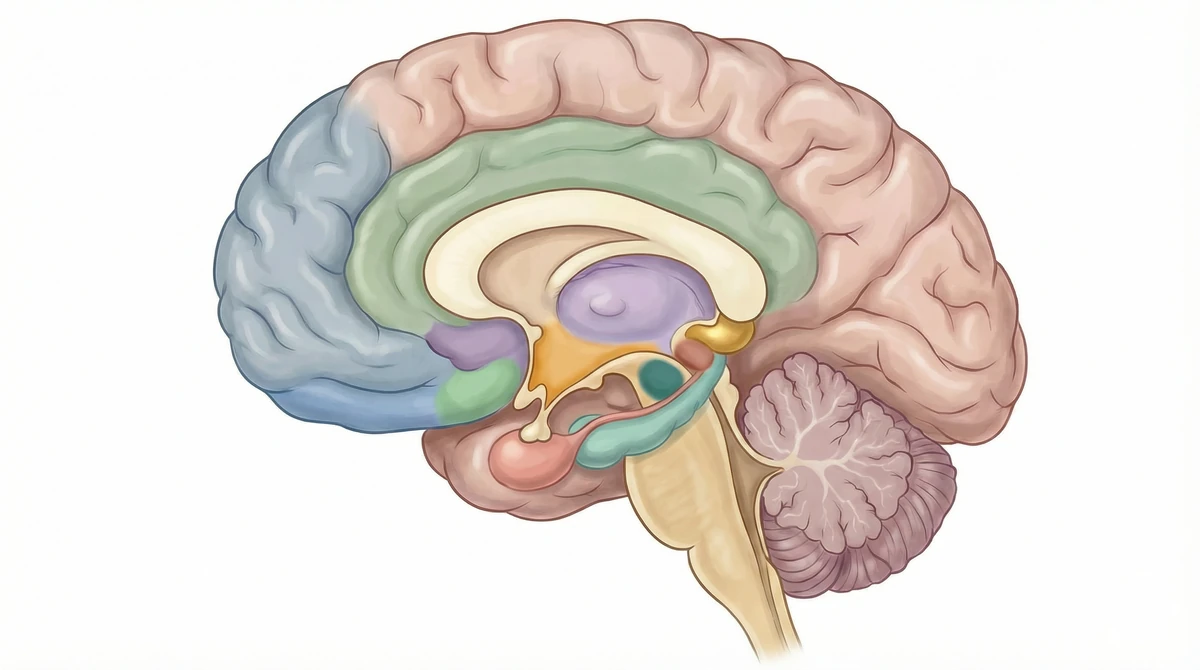
Interactive Attachment Brain Map
Explore the key brain structures involved in attachment. Click on any region to see how it functions differently across secure and insecure attachment patterns.
The Adult Attachment Interview (AAI)
Developed by Carol George, Nancy Kaplan, and Mary Main (1985) at UC Berkeley, the AAI is a semi-structured interview protocol that takes 45 minutes to 1.5 hours. It assesses an adult's "state of mind with respect to attachment" ~ not what happened to them, but how they make sense of what happened. The scoring system evaluates narrative coherence, not content.
Originally a research instrument, the AAI was generously gifted by Mary Main and Erik Hesse to clinicians after their research concluded. Today, the AAI questions have been integrated into biopsychosocial assessments used in clinical practice ~ allowing therapists to assess attachment patterns as part of comprehensive intake evaluations. The interactive Self-Assessment Tool below provides a session-ready version of these questions.
Classification Categories
Secure/Autonomous
Coherent, collaborative narrative. Values attachment relationships. Integrates positive and negative experiences into a balanced account. Responses are neither excessively brief nor rambling.
Dismissing
Minimizes the importance of attachment. May idealize parents without supporting memories, or derogate them. Responses tend to be brief and lacking in detail. Insists on inability to remember childhood.
Preoccupied
Confused, angry, or passive about attachment. May become enmeshed in past experiences during the interview. Responses are often long, grammatically entangled, and filled with irrelevant detail.
Unresolved/Disorganized
Lapses in the monitoring of reasoning or discourse during discussion of loss or abuse. May show disorientation ~ unusual attention to detail, prolonged silences, or sudden shifts to eulogistic speech. Assigned alongside a best-fitting organized classification.
Clinical Note
The AAI is scored based on narrative coherence ~ how the person tells their story ~ not the content of what happened. A person who experienced significant adversity can receive a Secure/Autonomous classification if they have processed those experiences into a coherent narrative. Conversely, someone with an objectively "good" childhood may receive an insecure classification if their narrative shows significant contradictions, idealization, or lack of memory. The related Current Relationship Interview (CRI) by Crowell & Owens extends this framework to adult romantic attachment.
Session Language
Language that reflects attachment awareness helps clients feel seen and understood. These examples are organized by attachment pattern to guide clinical conversations.
Attachment Screening Tools
Since attachment patterns are established in early childhood relationships and continue to function as the client's internal working model for relationships throughout adulthood, it is important to assess those childhood relationships. Equally important is the meaning that the client currently gives to those past relational experiences.
History is not destiny: the attachment style to one's primary caretaker that developed in childhood is not immutable. Once the attachment style has been assessed, the work of developing an "earned secure attachment" begins with the first step: identifying the client's current strategies used to defend against intimacy.
Clinical Note
Linda Curran recommends assigning these screenings prior to the client's first session and asking them to bring results to the initial meeting. Go over the results to make sure the directions were understood and followed ~ if not, why not? It's informative. The Levine & Heller questionnaire uses a three-style model (Anxious, Secure, Avoidant) that many clients find accessible and validating.
Downloadable Screening Resources
CP Chapter 4: Adult Attachment Styles
Curran, L. (2022). Comprehensive guide to adult attachment patterns.
Detailed exploration of attachment styles with clinical applications and case examples.
5 Pre-Session Screenings (8 PDFs)
ITQ (Trauma), Adult Attachment (AAQ), DES-II Dissociation, Sensitivity Questionnaire, and Columbia Suicide Screening ~ client & clinician versions
Adult Attachment Patterns Worksheet
This interactive worksheet draws on questions from the Adult Attachment Interview (see AAI section above). Use the guided mode to walk through questions one at a time in session, or switch to full view for between-session homework.
Adult Attachment Patterns Worksheet
This interactive worksheet contains 20 questions derived from the Adult Attachment Interview (AAI) protocol. Use the guided mode for in-session exploration or print a blank copy for between-session work.
Source: Curran, L. (2022). Workbook Chapter 3: The Role of Attachment in Trauma Therapy
For Clinicians: Pay attention to the coherence of the narrative ~ it is the coherence of the story, not the events themselves, that predicts attachment security.
Attachment Theory Across Modalities
Attachment theory is not a standalone modality ~ it is the substrate on which all relational trauma work rests. Each modality engages with attachment in its own way, but all share the recognition that healing happens in relationship.
Voices from the Field
Attachment theory continues to evolve through the work of contemporary researchers and clinicians who bridge neuroscience, developmental psychology, and clinical practice.
Key References
- Bowlby, J. (1969/1982). Attachment and Loss, Vol. 1: Attachment. Basic Books.
- Bowlby, J. (1988). A Secure Base: Clinical Applications of Attachment Theory. Routledge.
- Ainsworth, M.D.S., Blehar, M.C., Waters, E., & Wall, S. (1978).Patterns of Attachment: A Psychological Study of the Strange Situation.Lawrence Erlbaum.
- Main, M., & Hesse, E. (1990). Parents' unresolved traumatic experiences are related to infant disorganized attachment status. In M.T. Greenberg, D. Cicchetti, & E.M. Cummings (Eds.), Attachment in the Preschool Years.University of Chicago Press.
- Schore, A.N. (2001). Effects of a secure attachment relationship on right brain development, affect regulation, and infant mental health.Infant Mental Health Journal, 22(1-2), 7-66.
- Lanius, R.A., Terpou, B.A., & McKinnon, M.C. (2020). The sense of self in the aftermath of trauma. European Journal of Psychotraumatology, 11(1), 1807703.
- Beebe, B. et al. (2010). The origins of 12-month attachment.Attachment & Human Development, 12(1-2), 3-141.
- Johnson, S. (2008). Hold Me Tight: Seven Conversations for a Lifetime of Love. Little, Brown.
- Tatkin, S. (2012). Wired for Love. New Harbinger.
- Waldinger, R. & Schulz, M. (2023). The Good Life. Simon & Schuster.
- Harvard Center on the Developing Child. Serve and Return
- George, C., Kaplan, N., & Main, M. (1985). The Adult Attachment Interview. Unpublished manuscript, University of California at Berkeley.
- Kim, P., Leckman, J.F., Mayes, L.C., et al. (2010). The plasticity of human maternal brain.Behavioral Neuroscience, 124(5), 695-700.
- DeWall, C.N., Masten, C.L., Powell, C., et al. (2012). Do neural responses to rejection depend on attachment style?Social Cognitive and Affective Neuroscience, 7(2), 184-192.
- Curran, L. (2022). Chapter Four: Adult Attachment Styles. Based on Curran's 2016 interview with Diane Poole Heller, PhD.