Gestalt Therapy
Educational Resource

Gestalt Therapy
A holistic, experiential approach emphasizing present-moment awareness, personal responsibility, and the interconnectedness of mind, body, and environment.
Developed by Fritz Perls & Laura Perls with Paul Goodman (1940s-1950s)

CEUs are being negotiated. Post-tests, certificates, and CE credit are not currently available.
Introduction to Gestalt Therapy for Trauma Treatment
Target Audience: Licensed mental health professionals (psychologists, clinical social workers, licensed professional counselors, marriage and family therapists)
Gestalt Therapy, a humanistic and experiential approach developed by Fritz Perls, Laura Perls, and Paul Goodman, offers a profound framework for clinicians working with trauma. It is grounded in four key pillars: Field Theory, which considers the individual within their total environment; Phenomenology, which prioritizes the client's subjective experience; Dialogue, which emphasizes the authentic I-Thou relationship between therapist and client; and Experimentation, which uses creative interventions to deepen awareness. This modality moves beyond mere verbal processing, inviting clients to explore their 'here-and-now' experience, fostering a holistic integration of mind, body, and emotion. The Paradoxical Theory of Change is central, suggesting that authentic change arises from being more fully oneself, rather than striving to be someone else.
For trauma treatment, Gestalt Therapy's focus on the present moment provides a unique alternative to therapies that heavily rely on narrative recall of past events. It addresses how trauma is held in the body and expressed through contact boundary interruptions such as confluence, introjection, projection, retroflection, and deflection. Techniques like the 'Empty Chair' and 'Two-Chair' dialogues allow clients to safely externalize and engage with conflicting internal parts or unresolved interpersonal issues. For complex trauma, these classic techniques are modified to ensure client safety, for instance, by having the client remain in their own chair while imagining the other, thereby preventing overwhelming affective flooding. The emphasis is on creative adjustment and restoring the organism's capacity for self-regulation and meaningful contact with their environment.
While Gestalt Therapy has a rich clinical tradition, its evidence base is growing, with studies demonstrating its effectiveness for conditions like anxiety, depression, and PTSD. This module will deepen the clinician's understanding by providing a robust theoretical foundation and practical tools to apply in clinical practice. Participants will learn to utilize core Gestalt principles to enhance their therapeutic presence, work with somatic manifestations of trauma, and facilitate profound awareness in their clients. By mastering these concepts, clinicians will be better equipped to help traumatized individuals move from a state of fragmentation and 'unfinished business' toward wholeness and integrated functioning.
Upon completion of this module, the learner will be able to:
- 1Identify the four pillars of Gestalt Therapy and the Paradoxical Theory of Change.
- 2Differentiate between five key contact boundary interruptions (confluence, introjection, projection, retroflection, deflection) in the context of trauma.
- 3Describe the application of the Empty Chair and Two-Chair techniques for processing internal conflicts and relational dynamics.
- 4Analyze the importance of the 'here-and-now' focus and the I-Thou relationship in establishing safety and fostering client awareness.
- 5Apply modifications to classic Gestalt experiments for clients with complex trauma to ensure emotional safety and prevent re-traumatization.
CEUs are being negotiated. Post-tests, certificates, and CE credit are not currently available. The course overview and learning objectives are available now for educational use. Planned contact hours for this module: 2.
Featured Video
An interview with MaryLou Schack on Gestalt Therapy as a trauma treatment modality. Demo included.
What is Gestalt Therapy?
Gestalt therapy is a psychotherapeutic approach based on the concept of gestalt (German for "whole" or "pattern"), which emphasizes the holistic perception of the environment and how individuals navigate their challenges. As individuals face challenges, they select, organize, and problem-solve to understand the chaos and transform it into a usable, coherent whole.
The Here and Now Focus
"Lose your mind and come to your senses."
~ Fritz Perls
Gestalt therapy underscores personal responsibility and concentrates on individuals' immediate experiences in the present moment, rather than dwelling on the past or future.
Central to Gestalt therapy is the concept of unfinished business - unexpressed emotions such as anger, pain, and fear that continue to affect present functioning.
The Paradoxical Theory of Change
"Change occurs when one becomes what they are, not when they try to become what they are not."
- Arnold Beisser, MD (1970)
Historical Context
Gestalt psychology emerged in Germany around 1910, influenced by existential philosophy and Eastern philosophies such as Zen Buddhism and Taoism. Fritz Perls, a Freudian psychoanalyst, pioneered Gestalt therapy in the 1940s with his wife, Laura Perls. Paul Goodman, Robert Hefferline, and Fritz Perls laid the foundation through their seminal work Gestalt Therapy: Excitement and Growth in the Human Personality (1951).

The Four Pillars of Gestalt Therapy
See also: Window of Tolerance - a foundational concept across all trauma modalities.
These four theoretical pillars guide practitioners in their work with clients, providing a framework for understanding and facilitating change.
Gestalt therapy focuses on what is happening in the present moment. While the past affects how we perceive the world, the Gestalt therapist wants to understand what is happening for the client right now. The therapist asks the client to describe their feelings rather than trying to analyze or interpret them. This heightens awareness and relational depth.
Key Points:
- Immediate experience holds greater authority than analysis
- Describing feelings rather than interpreting them
- Heightens awareness and relational depth
- Traces back to Husserl, Heidegger, Merleau-Ponty, Sartre
In Gestalt, the dialogical relationship requires the therapist to bring their whole self to the relational contact with the client. The counsellor must be fully present, open, and authentic. This draws directly from Martin Buber's I and Thou (1923), brought into Gestalt by Laura Perls. See the expanded section below for Buber's philosophy and its clinical application.
Key Points:
- Rooted in Martin Buber's I and Thou (1923)
- Laura Perls brought Buber's philosophy directly into Gestalt
- Therapist holds authentic presence even when client cannot reciprocate
- See expanded Buber section below for full treatment
Field theory investigates interaction patterns between individual people and the 'field' - the environment. There are three interconnected fields: experiential field, relational field, and wider field. The field is in constant flux, so the counsellor keeps a flexible focus on what is figural while shuttling between the three fields.
Key Points:
- Three fields: experiential, relational, wider
- Person cannot be understood in isolation
- Holistic view of the client
- Developed by Kurt Lewin
Gestalt therapy explores the person not only through what they say but also through how they act. Gestalt experiments offer clients the chance to become involved in action-based exercises that heighten their awareness. Clients can try out new behaviors first in the safety of the therapeutic relationship and then in the outside world.
Key Points:
- Action as well as talk
- Trying new behaviors in safety
- Heightening awareness through doing
- Experiential rather than purely cognitive

Field Theory: Understanding the person in context of their interconnected environment
The Gestalt Cycle of Experience
Gestalt therapy understands healthy functioning as a continuous cycle of need-emergence and need-satisfaction. When the cycle completes, the organism returns to equilibrium. When it is interrupted, unfinished business accumulates.
Sensation
A need begins to emerge from the ground of experience. Something shifts in the body ~ hunger, tension, restlessness, a vague sense of unease. The organism registers that something wants attention.
Awareness
The sensation crystallizes into a recognizable figure. The person identifies what they need: 'I'm lonely,' 'I'm angry,' 'I need to move.' The need becomes figural against the ground.
Mobilization
Energy gathers to meet the need. The person begins to organize themselves ~ considering options, planning, building the internal resources to act. Excitement and anticipation build.
Action
The person reaches toward the environment to meet the need. They speak, move, ask, create. Energy flows outward from self toward other.
Contact
Full engagement with the environment. This is the peak of the cycle ~ the moment of genuine meeting between self and other. The need and its object come together.
Satisfaction
The need is met. The gestalt completes. There is a felt sense of resolution, nourishment, or closure. The figure dissolves back into ground.
Withdrawal
Energy recedes. The person lets go of the completed experience and returns to a state of relative equilibrium, available for the next emerging need.
Fertile Void
The open, receptive space between completed and emerging gestalts. Not emptiness but potentiality ~ the ground from which the next sensation will arise. Perls called this the 'creative indifference.'
Why This Matters Clinically
Every presenting problem can be understood as a disruption somewhere in this cycle. The therapist's job is to identify where the cycle breaks down and how the client interrupts it. A client who can feel sensation but cannot name it is stuck between stages 1 and 2. A client who knows what they need but cannot ask for it is stuck between stages 3 and 4. The seven contact interruptions described below map precisely onto these breakpoints.
The cycle is not a rigid sequence ~ it is a heuristic for tracking the flow of experience. In practice, stages overlap, reverse, and repeat. The value is in having a map for where the client's process gets stuck.
Keep this guide free.
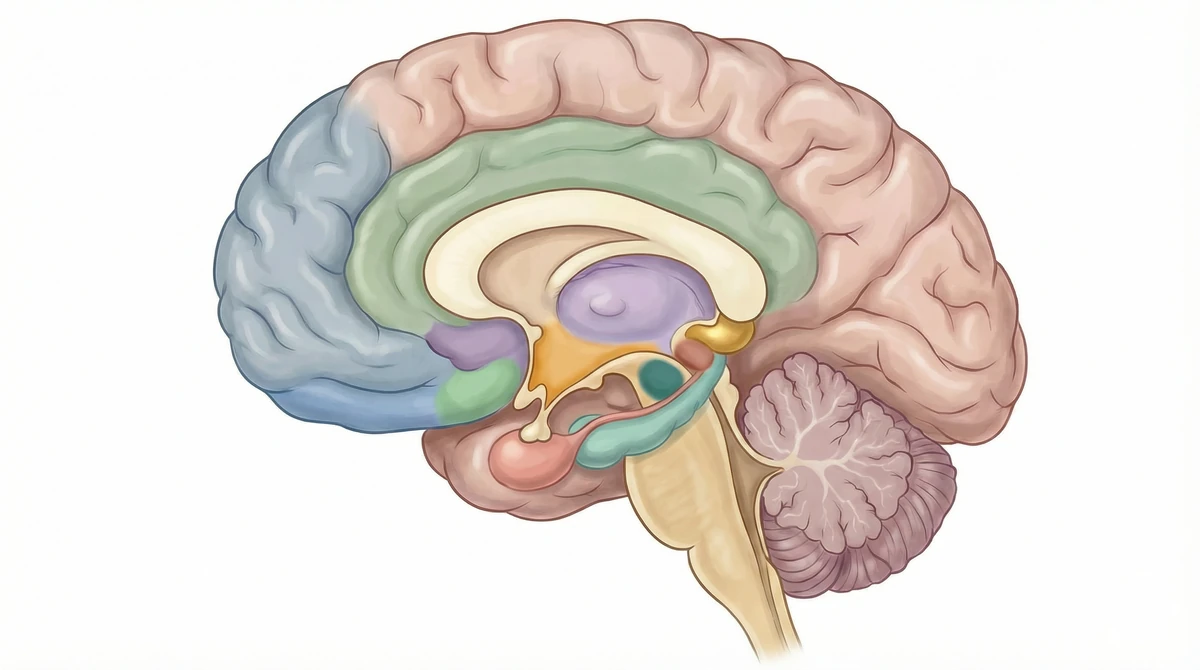
Neuroscience
Understanding the brain regions engaged by Gestalt therapy helps clinicians appreciate how experiential techniques activate neural pathways for healing.
Brain Regions Engaged by Gestalt Therapy
Click on any brain region to explore how Gestalt experiential techniques engage it.
Key Techniques
Gestalt therapy employs a variety of experiential techniques designed to heighten awareness and bring unconscious material into consciousness.
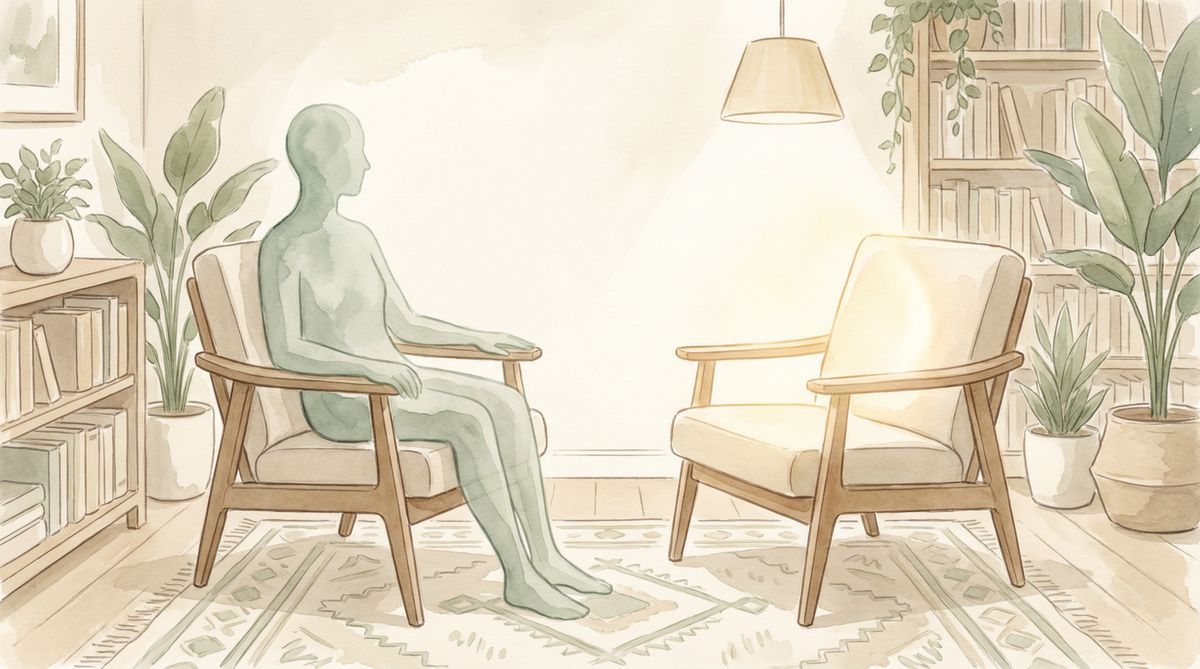
The Empty Chair Technique - Dialogue with an absent person or part of self
Gestalt Experiments
Experiments are not tasks ~ their point is not to get them done. They exist in Gestalt therapeutic work to provide present information about the client and to heighten awareness.
Adapted from 101 Trauma-Informed Interventions by Linda Curran, Premier Publishing & Media, 2013
- "What are you aware of right now in your body?"
- "Scan your body and say, 'Right now I am aware of...'"
- "Look around and describe in detail everything you are seeing, hearing, and sensing now."
- "To explore your moment-to-moment awareness, describe whatever you are hearing, seeing, or sensing in your body now."
- "Where do you feel that in your body?"
- "If that part of you had a voice, what would it say now?"
- "What does your body need right now?"
- "You say you feel 'shaky.' Would it be okay to stand up and let your body shake out some tension?"
- "How is the distance between us? Can we move our chairs closer?"
- "If you remain in eye contact with me, what ~ if anything ~ changes within you?"
- "What do you expect of me ~ both relationally and practically?"
- "Is there something you want or need from me right now?"
- "Stand up and move away, leaving about 15 feet between us. Begin slowly walking toward me while paying attention to your internal experience. Find the distance where you feel most comfortable."
- "As I walk toward you, say 'Stop!' when you need to. Notice what happens in your body."
- "As you say 'Stop,' plant your feet firmly and hold both hands up and out. Notice what happens."
- "I appreciate your 'No.'"
- "How do you stop yourself from expressing anger?"
- "If you weren't laughing, how else might you express your feelings right now?"
- "Would you be willing to exaggerate that emotion, raise your voice, and stand up?"
- "While expressing your anger, would you be willing to squeeze, pound, or shake this pillow?"
- "What is it like when you change 'I have to...' to 'I choose to...'?"
- "What is it like to say 'won't' in place of 'can't'?"
- "Is there a statement behind your question?"
- "Try completing 10 sentences starting, 'I really like the way I...'"
- "In this group setting, what catches your eye? Does a certain voice stand out for you?"
- "In this group, who do you feel closest to and furthest away from?"
- "What do you need from this group right now?"
- "Have we, as a group, developed sufficiently clear rules and boundaries for you to feel safe?"
Source Attribution
These Gestalt experiments are adapted from 101 Trauma-Informed Interventions: Activities, Exercises and Assignments to Move the Client and Therapy Forward by Linda Curran, published by Premier Publishing & Media, 2013. The original work draws on the foundational contributions of Frederick S. Perls, Ralph F. Hefferline, and Paul Goodman.
Working with Complex Trauma
Gestalt therapy's emphasis on present-moment awareness and the therapeutic relationship makes it well-suited for trauma work. However, complex trauma requires specific modifications to ensure safety and effectiveness.
The Gestalt emphasis on present-moment experience can be overwhelming for trauma survivors. Titrate exposure to intense affect.
- Brief contact with feelings, then grounding
- Use "experiments" with clear boundaries
- Honor client's pace over technique
Classic empty chair can be destabilizing for complex trauma. Modify to maintain safety while accessing unfinished business.
- Start with "imaginal" rather than enacted dialogue
- Allow client to stay in their own chair
- Use protective figures or allies in the work
Contact Interruptions as Survival
In Gestalt, contact interruptions (retroflection, deflection, confluence, etc.) are often seen as blocks to growth. With trauma survivors, these same patterns were survival adaptations. Honor them before exploring change.
Reframe as Wisdom
- • Retroflection protected from dangerous expression
- • Deflection maintained needed distance
- • Confluence ensured attachment survival
- • Desensitization prevented overwhelm
Gradual Exploration
- • Appreciate the function before challenging
- • Explore cost/benefit in current life
- • Experiment with small changes first
- • Build new capacities alongside old patterns
The I-Thou Relationship in Trauma
For trauma survivors, the therapist's offer of authentic I-Thou contact can initially feel threatening ~ their nervous system learned that genuine connection is dangerous. The therapeutic relationship becomes the vehicle for repair precisely because it offers what the client has learned to distrust. (For the full philosophical background, see Buber's I-Thou section above.)
Relational Considerations for Trauma Work
- Transparency with boundaries: Be clear about your experience while maintaining the therapeutic frame. Self-disclosure serves the client's process, not the therapist's need to be seen.
- Paced contact: Build contact tolerance gradually. Even being truly seen can overwhelm a client whose survival depended on invisibility. Titrate I-Thou moments.
- Rupture as repair opportunity: Inevitable ruptures in the therapeutic relationship become healing moments. The repair process ~ acknowledging the break, staying present through discomfort, re-establishing contact ~ models something the client may never have experienced.
- Consistent presence: Predictability creates safety for exploration. The therapist's steady, non-exploitative presence is itself a neurobiological intervention.
Key Clinical Insight
With complex trauma, the Gestalt paradoxical theory of change becomes especially relevant: "Change occurs when one becomes what one is, not when one tries to become what one is not." Help clients fully accept their protective patterns before inviting new possibilities.
Complementary Approaches
Gestalt therapy integrates well with other trauma modalities. Each approach offers unique contributions to complex trauma work:
Deep Brain Reorienting
Brainstem-level processing and orienting tension
EMDR
Bilateral processing for memory reconsolidation
Sensorimotor
Body-based processing and movement
Somatic Experiencing
Titration and nervous system regulation
Internal Family Systems
Parts work and Self-leadership
Neurofeedback
Brain wave training for regulation
Complex Trauma Comparison Chart
A comprehensive guide comparing when to use each modality's specific complex trauma modifications. Includes clinical decision trees, sequencing considerations, and at-a-glance comparison tables.
Session Language
Common phrases and questions used by Gestalt therapists
Glossary of Terms
Key terms and concepts in Gestalt Therapy
Showing 24 of 24 terms
Gestalt Therapy Quick Reference Card
A comprehensive PDF with the Four Pillars, Buber's I-Thou, Cycle of Experience, all 7 contact interruptions, key techniques, session language examples, complex trauma modifications, and quick-reference tables for clinical use.
Influence on Modern Trauma Modalities
Gestalt Therapy has been foundational to many contemporary trauma and body-based therapies. Its emphasis on present-moment awareness, body-based interventions, and experiential approaches has shaped the field of trauma treatment.
Why Gestalt Is Listed First on This Site
This is not alphabetical order. Gestalt Therapy is listed first because it is the headwater. The lineage that most EMDR trainings skip runs directly through Gestalt:
1940s-50s
Gestalt Therapy
Perls, Hefferline, Goodman
1970s
NLP
Bandler & Grinder model Perls
1987
EMDR
Shapiro (trained in NLP)
1990s+
SE, SP, IFS, DBR
All draw from Gestalt principles
Bandler and Grinder didn't invent NLP from nothing ~ they modeled Fritz Perls. Shapiro didn't invent EMDR from nothing ~ she was trained in NLP. Peter Levine studied with Perls directly. Pat Ogden's body-based awareness work is Gestalt with a neuroscience vocabulary. Schwartz's parts work in IFS echoes Perls' empty chair and topdog/underdog.
Every modality on this site owes a debt to Gestalt principles: present-moment awareness, the primacy of bodily experience, unfinished business as the engine of symptoms, and the therapist's authentic presence as a neurobiological intervention. When you understand Gestalt, you understand why these other approaches work ~ not just how.
For Clinicians Who Don't "Do" Gestalt
If you practice EMDR, SE, Sensorimotor, or IFS, you are already doing Gestalt ~ you just may not know it. Every time you ask a client to "notice what's happening in your body right now," you are using Gestalt's awareness continuum. Every time you work with a part in the empty chair, you are running a Gestalt experiment. Every time you track a sensation to completion, you are following Perls' principle of organismic self-regulation.
The difference between a clinician who understands this lineage and one who doesn't? The first one knows why they're doing what they're doing ~ and can adapt when the protocol doesn't fit the client in front of them. That's the flexibility that comes from understanding foundations, not just following steps.
Key Gestalt Contributions to These Modalities:
Body awareness, present-moment focus, completing interrupted responses (similar to unfinished business)
Body-focused techniques, present-moment awareness of physical experience, mindful attention to sensations and movements
Directly influenced by Gestalt, uses mindfulness and body awareness, experiential and present-centered approach
Parts work echoes two-chair technique, dialogue between different parts of self, integration of polarities
Developed alongside Gestalt with mutual influence, role-playing and enactment, empty chair technique used in both
Further Reading
Foundational texts, research, and training resources for deeper exploration of Gestalt Therapy
Foundational Texts
Research & Evidence
Resolving 'Unfinished Business': Efficacy of Experiential Therapy Using Empty-Chair Dialogue
Paivio, S.C. & Greenberg, L.S. (1995)
Research on the empty chair technique
Full Text PDFDialogical Exposure Therapy for PTSD
Butollo, W., et al. (2016)
Gestalt-derived intervention for trauma
Full Text PDFGestalt Psychology and Gestalt Therapy
Wertheimer, M. (1978)
Foundational paper on the relationship between Gestalt psychology and Gestalt therapy
Full Text PDFThe Meaning of Here-Now, There-Then in Gestalt Therapy
Perls, F. (1978)
Key paper on present-moment awareness in Gestalt therapy
Full Text PDF