
Memory Reconsolidation
How retrieved memories may become modifiable under specific conditions ~ and what laboratory reconsolidation research can and cannot tell clinicians.
Landmark rat fear-conditioning study: Nader, Schafe & LeDoux, Nature (2000)
CEUs are being negotiated. Post-tests, certificates, and CE credit are not currently available.
Memory Reconsolidation and Enduring Therapeutic Change
Target Audience: Licensed mental health professionals (psychologists, clinical social workers, licensed professional counselors, marriage and family therapists)
Memory reconsolidation refers to the restabilization of a previously consolidated memory after reactivation has made it labile under particular conditions. Retrieval alone is not sufficient. Research reviewed in this module emphasizes the importance of a mismatch or prediction error between what the memory predicts and what occurs. When destabilization takes place, new information may be incorporated before the memory restabilizes. Boundary conditions matter, and the precise parameters that lead to reconsolidation, extinction, or no durable change are not fully standardized in clinical populations.
Reconsolidation differs conceptually from extinction learning. Extinction establishes new inhibitory learning while the original response may remain available; reconsolidation proposes modification of aspects of the reactivated memory trace itself. Research implicates interacting amygdala, hippocampal, prefrontal, noradrenergic, and protein-synthesis processes, but clinicians cannot directly observe reconsolidation during psychotherapy. Durable symptom change may be consistent with reconsolidation, yet it does not prove that this mechanism occurred or exclude other mechanisms such as new learning, skill acquisition, relational change, or changes in life circumstances.
Clinical translation requires caution. Laboratory studies often use simple conditioned fear, whereas traumatic memories can be multisensory, autobiographical, repeated, and embedded in developmental and relational contexts. Findings from reconsolidation-oriented PTSD interventions are promising, but risk of bias, replication concerns, and heterogeneity remain. Medication and substance effects also require careful case-by-case review; clinicians should coordinate with prescribers and must not direct abrupt medication changes. Reconsolidation is a useful explanatory framework, not a panacea or a substitute for assessment, stabilization, and evidence-based treatment planning.
Upon completion of this module, the learner will be able to:
- 1Define memory reconsolidation and identify the roles of reactivation, prediction error, lability, and restabilization.
- 2Differentiate reconsolidation from extinction learning and compare their proposed implications for relapse.
- 3Describe the contributions of the amygdala, hippocampus, prefrontal cortex, and noradrenergic signaling to reconsolidation research.
- 4Analyze the translation limits between conditioned-fear laboratory paradigms and complex autobiographical trauma memories.
- 5Apply an evidence-bounded reconsolidation framework without inferring an unobservable mechanism or directing medication changes.
CEUs are being negotiated. Post-tests, certificates, and CE credit are not currently available. The course overview and learning objectives are available now for educational use. Planned contact hours for this module: 3.
Understanding Memory Reconsolidation
Memory reconsolidation describes the restabilization of a previously consolidated memory after retrieval has made it labile under particular conditions. In a landmark rat auditory fear-conditioning experiment, Nader, Schafe, and LeDoux (2000) found retrieval-dependent sensitivity to post-retrieval protein-synthesis inhibition in lateral and basal amygdala.
Prior emotional learning may change when it becomes active alongside new experience. Reconsolidation is one possible explanation; extinction, new learning, relational change, and practice can also contribute to durable improvement.
Notice when an old expectation becomes active, what new experience the client can take in, and whether change holds outside the session. Track the client’s response over time.
The Four-Step Reconsolidation Process
Researchers describe a sequence of retrieval, possible destabilization, time-limited restabilization, and later memory expression. These stages are defined experimentally. In clinical work, follow the client’s activation, capacity for new experience, and what changes across sessions.
Free education for trauma clinicians. Funded by clinicians.
Reconsolidation vs. Extinction
Extinction and reconsolidation are distinguishable in experimental research. In treatment, follow what changes in the client's response, whether that change transfers to daily life, and how it holds over time.
Extinction | Reconsolidation | |
|---|---|---|
| What happens to the original memory | Remains intact; a new inhibitory trace is laid over it | The reactivated trace is proposed to be updated during restabilization |
| Mechanism | New inhibitory learning that competes with the older response | Retrieval-dependent updating under specific boundary conditions |
| Durability | Vulnerable to relapse: spontaneous recovery, renewal, reinstatement | Can reduce return of responding in some paradigms; not uniformly relapse-proof |
| Clinical correlate | Clinical change may rely on new learning and context | Clinical change may include updating prior emotional learning |
| What we can infer clinically | Mechanism cannot be identified from one client's report alone | Mechanism cannot be confirmed from symptom change alone |
Schiller et al. (2010) reported reduced return of conditioned fear when extinction followed retrieval within the tested timing window. A registered direct replication by Chalkia et al. (2020) did not find a reactivation-extinction advantage. That is the honest version: promising paradigm, uneven replication.
Evidence summary, not a direct quotation
Neuroscience of Reconsolidation
Key Takeaway for Clinicians
Reconsolidation is one possible contributor to therapeutic change. Track what shifts in the client’s responses, relationships, and day-to-day life ~ and what holds over time.
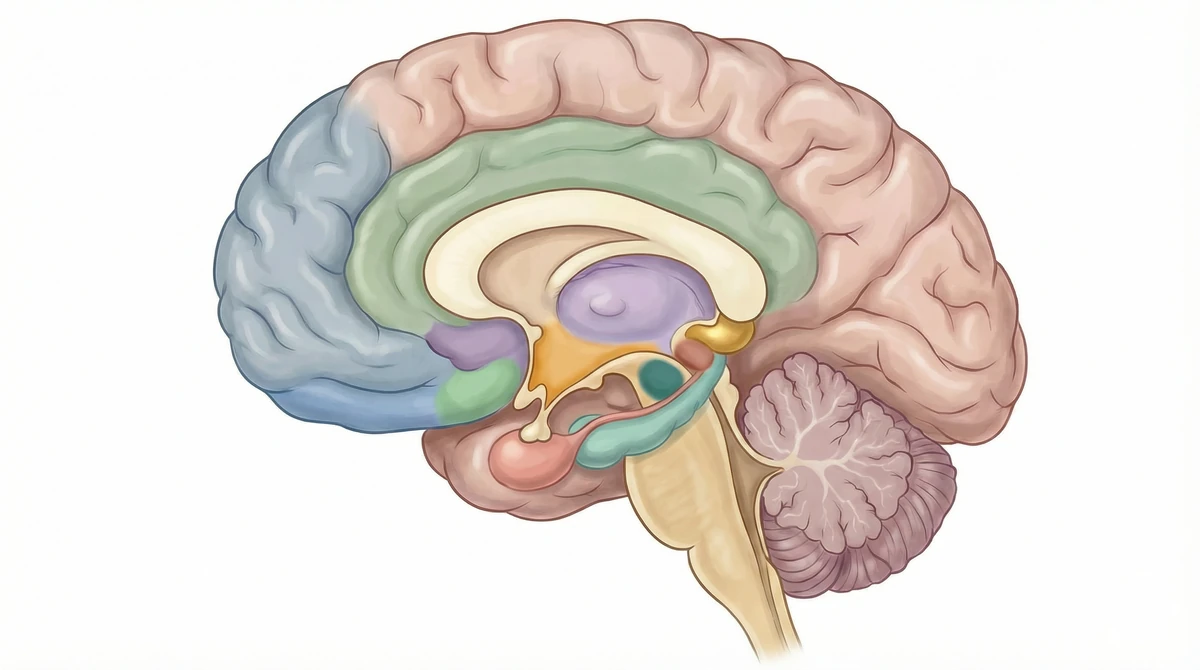
Interactive Reconsolidation Brain Map
Explore structures studied in memory and fear-learning research. The descriptions distinguish laboratory findings from clinical inference.
Medications, Substances, and Trauma Processing
Laboratory studies show that specific drugs can alter fear learning or retrieval-dependent memory under controlled conditions. Most cited studies are animal, conditioned-fear, or review evidence ~ not direct tests of routine medication use during psychotherapy.
Assess the client's alertness, participation, and memory across sessions. Document patterns and collaborate with the prescriber when medication effects may matter.
Keep the assessment clinical. Track alertness, participation, safety, and memory; document what you observe. Medication decisions belong with the prescribing clinician.
Session Language That Supports Reconsolidation
Reconsolidation Across Modalities
Lane et al. (2015) proposed reconsolidation as one possible explanation for updating emotional learning across psychotherapies. The table maps clinical elements to that hypothesis and summarizes the evidence for each.
| Modality | Clinical Elements | Reconsolidation-Informed Hypothesis | Evidence Boundary |
|---|---|---|---|
| EMDR | Target-memory activation with dual attention and bilateral stimulation | Working-memory competition and new information may alter later memory expression | EMDR is effective for PTSD; whether reconsolidation is its necessary mechanism remains unsettled |
| Deep Brain Reorienting (DBR) | Orienting tension and sequenced attention to shock-related experience | New embodied and relational experience may update prior threat learning | A DBR RCT supports symptom improvement; direct reconsolidation-mechanism evidence is not established |
| Somatic Experiencing | Titrated attention to trauma-related sensation and defensive responses | Manageable activation paired with new action or safety may update expectations | This is a clinical hypothesis, not a demonstrated unique neural mechanism |
| Internal Family Systems (IFS) | Accessing vulnerable parts while maintaining Self-led witnessing | A new relational and emotional experience may update earlier learning | Reconsolidation is a possible explanatory lens, not a proven IFS mechanism |
| Gestalt Therapy | Experiential dialogue that activates relational and emotional learning | Contradictory lived experience may update prior expectations | The table translates theory; it does not establish a Gestalt-specific neural pathway |
| Sensorimotor Psychotherapy | Mindful tracking of sensation, movement, posture, and procedural action | New action and present-time orientation may revise threat-linked predictions | A plausible formulation, not proof that reconsolidation produced the clinical outcome |
Scientific Context
What the Evidence Supports
Astill Wright et al. (2021) pooled 11 PTSD-treatment comparisons (n=372) and reported a large 1–4-week estimate (SMD −1.42, 95% CI −2.25 to −0.58). Interventions varied substantially, statistical heterogeneity was high (I²=91%), most studies had significant risk of bias, and GRADE certainty for the pooled treatment outcome was very low.
Reactivation of a consolidated memory returns it again to a labile state from which the memory has to undergo stabilization (i.e., reconsolidate) over time.
~ Karim Nader, Cold Spring Harbor Perspectives in Biology, 2015
The core idea of this paper is that therapeutic change in a variety of modalities, including behavioral therapy, cognitive-behavioral therapy, emotion-focused therapy, and psychodynamic psychotherapy, results from the updating of prior emotional memories through a process of reconsolidation that incorporates new emotional experiences.
~ Lane, Ryan, Nadel & Greenberg, Behavioral and Brain Sciences, 2015
BZDs should be considered relatively contraindicated for patients with PTSD or recent trauma. Evidence-based treatments for PTSD should be favored over BZDs.
~ Guina, Rossetter, DeRhodes, Nahhas & Welton, Journal of Psychiatric Practice, 2015
Resources & Bibliography
Primary Sources (Peer-Reviewed)
Fear memories require protein synthesis in the amygdala for reconsolidation after retrieval
Nader, K., Schafe, G. E., & LeDoux, J. E. • Nature (2000)
Landmark rat auditory fear-conditioning study showing retrieval-dependent sensitivity to post-retrieval protein-synthesis inhibition in lateral and basal amygdala.
Extinction-reconsolidation boundaries: key to persistent attenuation of fear memories
Monfils, M. H., Cowansage, K. K., Klann, E., & LeDoux, J. E. • Science (2009)
Rat fear-conditioning study in which extinction 10 minutes or one hour after a retrieval trial attenuated later fear, whereas six- or 24-hour timing did not.
Preventing the return of fear in humans using reconsolidation update mechanisms
Schiller, D., Monfils, M. H., Raio, C. M., et al. • Nature (2010)
Human laboratory conditioned-fear experiment reporting reduced return of fear when extinction occurred during a retrieval-related window; later registered replications have not consistently reproduced the advantage.
No persistent attenuation of fear memories in humans: A registered replication of the reactivation-extinction effect
Chalkia, A., Weermeijer, J., Van Oudenhove, L., & Beckers, T. • Cortex (2020)
Registered direct replication that did not find a reactivation-extinction advantage, underscoring that the human effect is not robust across studies.
Memory reconsolidation, emotional arousal, and the process of change in psychotherapy
Lane, R. D., Ryan, L., Nadel, L., & Greenberg, L. • Behavioral and Brain Sciences (2015)
Review and theoretical synthesis proposing reconsolidation as one mechanism by which new emotional experiences may update prior memories in psychotherapy.
Behavioral and neural analysis of GABA in the acquisition, consolidation, reconsolidation, and extinction of fear memory
Makkar, S. R., Zhang, S. Q., & Cranney, J. • Neuropsychopharmacology (2010)
Review of GABAergic mechanisms across acquisition, consolidation, reconsolidation, and extinction in fear-learning research.
Combined pharmacotherapy and cognitive-behavioral therapy for anxiety disorders: Medication effects, glucocorticoids, and attenuated treatment outcomes
Otto, M. W., McHugh, R. K., & Kantak, K. M. • Clinical Psychology: Science and Practice (2010)
Conceptual review of combined medication and CBT outcomes in anxiety disorders; proposes a glucocorticoid-mediated influence on extinction learning during exposure.
Prediction error demarcates the transition from retrieval, to reconsolidation, to new learning
Sevenster, D., Beckers, T., & Kindt, M. • Learning & Memory (2014)
Human fear-conditioning experiment showing that prediction error can mark transitions among retrieval, reconsolidation, and new learning under the tested conditions.
Consolidation/reconsolidation therapies for the prevention and treatment of PTSD and re-experiencing: a systematic review and meta-analysis
Astill Wright, L., Horstmann, L., Holmes, E. A., & Bisson, J. I. • Translational Psychiatry (2021)
Review of mixed pharmacological, ECT, and psychological interventions. The pooled 1–4-week PTSD treatment estimate was large across 11 comparisons (n=372), but heterogeneity was substantial (I²=91%) and certainty was very low.
Books for Clinicians
Unlocking the Emotional Brain: Eliminating Symptoms at Their Roots Using Memory Reconsolidation
Bruce Ecker, Robin Ticic, & Laurel Hulley
Routledge, 2022 (1st ed., classic edition)
Publisher pageNeuroscience of Enduring Change: Implications for Psychotherapy
Richard D. Lane & Lynn Nadel (Eds.)
Oxford University Press, 2020
Publisher page