
Eye Movement Desensitization and Reprocessing
A comprehensive psychotherapy approach that enables people to heal from the symptoms and emotional distress resulting from disturbing life experiences.
Developed by Francine Shapiro, PhD (1987)

CEUs are being negotiated. Post-tests, certificates, and CE credit are not currently available.
EMDR: A Deep Dive into the 8-Phase Protocol
Target Audience: Licensed mental health professionals (psychologists, clinical social workers, licensed professional counselors, marriage and family therapists)
Eye Movement Desensitization and Reprocessing (EMDR) therapy is a structured psychotherapy approach developed by Dr. Francine Shapiro in the late 1980s. It is grounded in the Adaptive Information Processing (AIP) model, which posits that much of psychopathology is due to the maladaptive encoding of and/or incomplete processing of traumatic or disturbing adverse life experiences. The AIP model suggests that the brain has a natural, physiological information processing system to integrate experiences, but this system can be blocked when a traumatic event occurs, causing the memory to be stored dysfunctionally with the original distressing emotions, cognitions, and physical sensations. EMDR therapy facilitates the resumption of normal information processing and integration, allowing the brain to resolve the unprocessed memories and alleviate the associated symptoms.
The clinical application of EMDR is distinguished by its unique use of bilateral stimulation (BLS), such as eye movements, bilateral sounds, or tactile taps, while the client focuses on the targeted traumatic memory. This process is embedded within a standardized eight-phase protocol that ensures client safety and therapeutic fidelity. The phases include history-taking and treatment planning, preparation for resource development, assessment of the target memory with its associated negative cognition and SUD (Subjective Units of Disturbance) rating, desensitization of the memory using BLS, installation of a preferred positive cognition with a VOC (Validity of Cognition) rating, a body scan to identify and process residual somatic distress, closure to ensure the client leaves the session feeling stable, and reevaluation at the beginning of subsequent sessions. This structured approach, which includes a unique targeting sequence addressing past events, present triggers, and future templates, makes EMDR a powerful and efficient treatment for trauma.
EMDR therapy is one of the most well-researched treatments for Post-Traumatic Stress Disorder (PTSD) and is recognized as an effective treatment by numerous international health organizations. The evidence base supporting EMDR extends to its application for other conditions, including complex trauma, anxiety disorders, and depression. The mechanism of action is understood to involve dual attention, where the client simultaneously focuses on the past memory and the present safety of the therapeutic environment, and memory reconsolidation, where the traumatic memory is brought into a labile state and then re-stored in a more adaptive, less distressing form. This module will deepen the clinician's understanding of the AIP model, provide a comprehensive overview of the eight-phase protocol, and equip them with the foundational knowledge to begin supervised training in this evidence-based modality.
Upon completion of this module, the learner will be able to:
- 1Identify the core tenets of the Adaptive Information Processing (AIP) model and its role as the theoretical foundation of EMDR therapy.
- 2Describe the eight phases of the standard EMDR protocol, including the key clinical activities within each phase.
- 3Differentiate between the Subjective Units of Disturbance (SUD) scale and the Validity of Cognition (VOC) scale and their application in treatment.
- 4Explain the concept of dual attention and its proposed role in facilitating memory reconsolidation during the desensitization phase.
- 5Analyze common modifications to the standard protocol for working with clients with complex trauma, such as resource development and affect tolerance skills.
CEUs are being negotiated. Post-tests, certificates, and CE credit are not currently available. The course overview and learning objectives are available now for educational use. Planned contact hours for this module: 3.
Featured Video
A complete EMDR therapy session demonstration from EMDR Step by Step Plus with Linda A. Curran, BCPC, LPC, CAADC, CCDPD.
What is EMDR?
EMDR (Eye Movement Desensitization and Reprocessing) is a psychotherapy treatment originally designed to alleviate the distress associated with traumatic memories. The therapy facilitates the accessing and processing of traumatic memories to bring them to an adaptive resolution.
After successful EMDR therapy, affective distress is relieved, negative beliefs are reformulated, and physiological arousal is reduced. During EMDR therapy, the client attends to emotionally disturbing material in brief sequential doses while simultaneously focusing on an external stimulus, typically therapist-directed lateral eye movements.
EMDR therapy is now recognized as an effective form of treatment for trauma and other disturbing experiences by organizations such as the American Psychiatric Association, the World Health Organization, and the Department of Defense.
In 1987, Francine Shapiro made the chance observation that eye movements can reduce the intensity of disturbing thoughts. She developed EMDR therapy through careful research and clinical practice, eventually creating a comprehensive 8-phase treatment approach.
Over 30 randomized controlled trials have demonstrated EMDR's effectiveness. It is now recommended as a first-line treatment for PTSD by major health organizations worldwide and has been shown effective for anxiety, depression, and other conditions.
Adaptive Information Processing Model
See also: Window of Tolerance - a foundational concept across all trauma modalities.
The Adaptive Information Processing (AIP) model is the theoretical foundation of EMDR therapy. It proposes that the brain has a natural information processing system that typically moves disturbing experiences toward adaptive resolution.
When a traumatic or very negative event occurs, information processing may be incomplete. The memory is stored in a state-specific, dysfunctional form with the original images, sounds, thoughts, and feelings. These unprocessed memories are the basis of current dysfunction.
EMDR therapy facilitates the resumption of normal information processing and integration, allowing the memory to be stored adaptively with appropriate emotions, physical sensations, and beliefs.
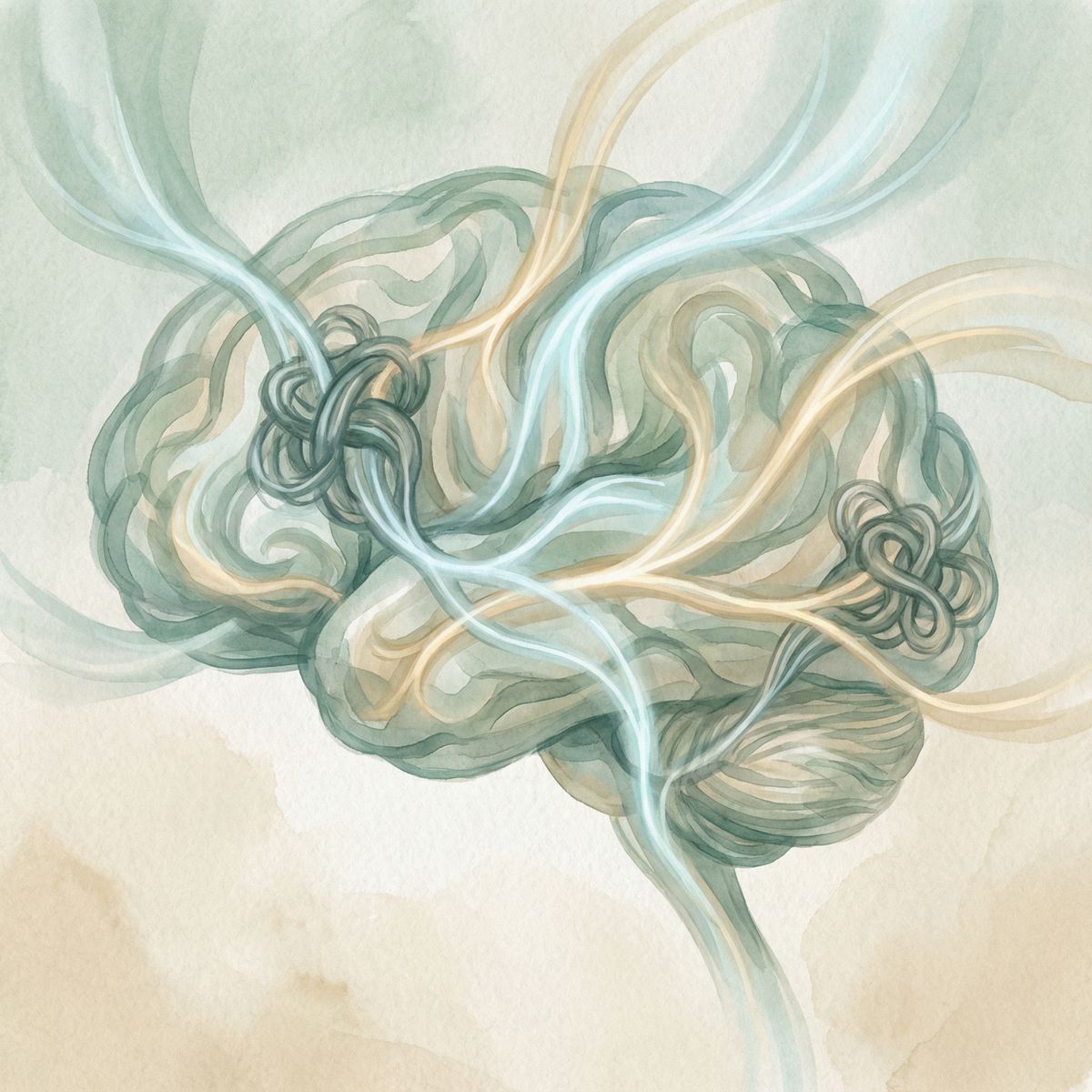
Stored in isolated memory network with original disturbing emotions, sensations, and beliefs. Triggered by current stimuli, causing present-day symptoms.
Bilateral stimulation activates the information processing system. Memory networks link and integrate. Adaptive information is accessed and connected.
Memory stored with appropriate emotions and beliefs. No longer triggered by present stimuli. Learning has taken place and is available for future use.
The Lineage EMDR Doesn't Talk About
EMDR was not invented from whole cloth. Francine Shapiro assembled it from components that existed decades before her 1987 walk in the park:
Gestalt Therapy (1951)
Body awareness, imagery, empty chair dialogue, here-and-now focus, the therapeutic relationship as intervention. Perls was working with trauma somatically before anyone called it "somatic."
Hypnosis and Guided Imagery
The use of guided imagery combined with sensory stimulation has been a component of psychotherapeutic technique long before its formal integration into EMDR (Yontef, 1993; Beck, 1976).
Neuro-Linguistic Programming (1975)
NLP was explicitly modeled on three therapists ~ Fritz Perls (Gestalt), Virginia Satir (family systems), and Milton Erickson (hypnosis). The eye movement patterns, anchoring techniques, and representational systems that NLP codified became building blocks of EMDR.
Exposure Therapy and CBT
The cognitive restructuring component (negative cognition → positive cognition) and the systematic approach to distressing material.
The lineage runs: Hypnosis → Gestalt → NLP → EMDR. Each borrowed from its predecessors.
This isn't a criticism ~ it's a liberation. When you understand that these components existed independently and effectively before they were assembled into an 8-phase protocol, you have permission to use them independently again. You can deconstruct what was constructed. That's what EMDR Deconstructed is about. Not breaking the rules ~ understanding that the "rules" are assembled from tools you already have access to.
Keep this guide free.
Neuroscience
Understanding the neuroscience behind EMDR helps clinicians appreciate why bilateral stimulation and dual attention work. The Adaptive Information Processing model is grounded in how the brain naturally processes and integrates experiences.
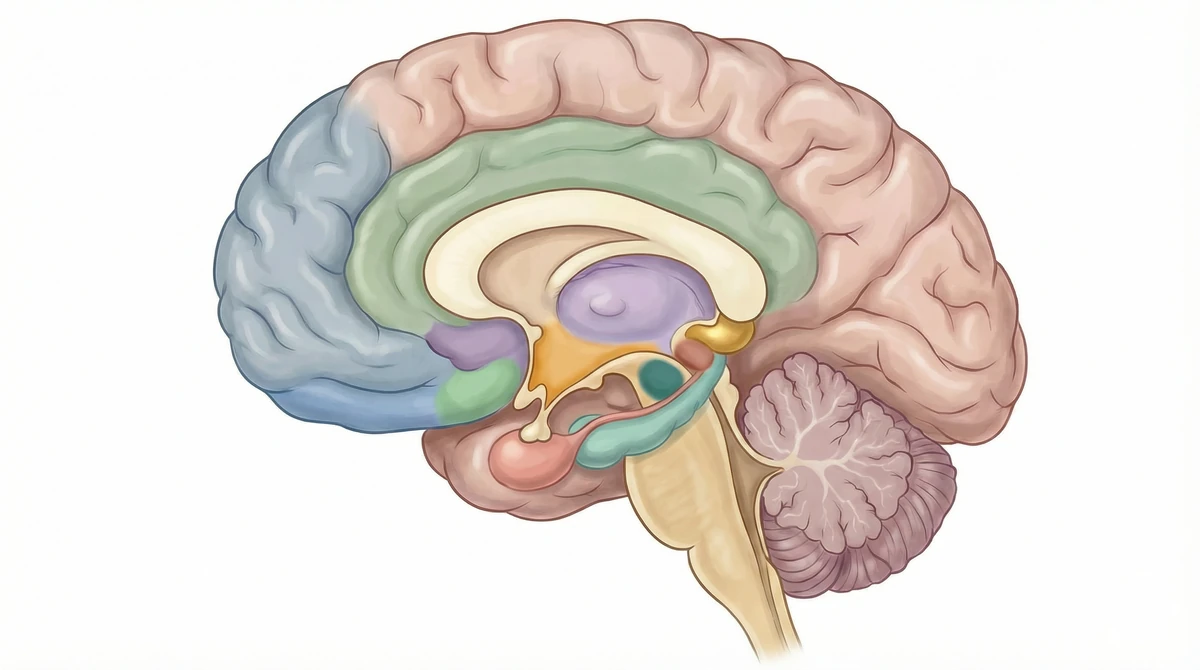
Brain Regions Targeted by EMDR
Click on any brain region to explore how EMDR bilateral stimulation engages it.
Key Neural Mechanisms
Working Memory Taxation
Bilateral stimulation taxes working memory, reducing the vividness and emotionality of traumatic memories during reprocessing.
Orienting Response
Eye movements trigger an orienting response that shifts the brain into a state of relaxed alertness, facilitating information processing.
Interhemispheric Communication
Bilateral stimulation enhances communication between brain hemispheres, supporting integration of cognitive and emotional material.
Memory Reconsolidation
EMDR activates the memory reconsolidation window, allowing traumatic memories to be updated with new, adaptive information.
Medication Alert: Substances That May PREVENT EMDR Processing
Benzodiazepines, beta-blockers, and other substances can suppress the neurobiological machinery required for memory reconsolidation ~ the mechanism through which EMDR produces lasting change. If a client is on these medications, EMDR may appear to "not work" even when the protocol is executed correctly.
Guina et al. (2015) concluded in their systematic review that benzodiazepines should be considered relatively contraindicated for patients with PTSD or recent trauma.
Bilateral Stimulation

Bilateral stimulation (BLS) is a core component of EMDR therapy. It involves alternating left-right stimulation that activates both hemispheres of the brain while the client focuses on the traumatic memory.
The "dual attention" aspect ~ simultaneously holding the memory and tracking the external stimulus ~ is thought to tax working memory, reducing the vividness and emotionality of the traumatic memory.
The most common form of BLS. The client follows the therapist's fingers or a light bar moving horizontally. Typically 24-36 movements per set.
Alternating tones or sounds delivered through headphones, switching between left and right ears. Useful when eye movements are difficult.
Alternating taps on the client's hands or knees, or using handheld pulsers. Particularly useful for clients who prefer not to close their eyes.
Key activities, clinical notes, and detailed guidance for each phase
EMDR-Specific Scales
These scales are integral to the EMDR protocol, used during Assessment (Phase 3), Desensitization (Phase 4), and Installation (Phase 5).
SUD Scale (0-10)
Subjective Units of Disturbance ~ used during each set of bilateral stimulation to track distress level. Target: 0 or ecological.
VoC Scale (1-7)
Validity of Cognition ~ measures how true the positive cognition feels. Used in Assessment (Phase 3) and Installation (Phase 5). Target: 7.
Standardized Screening Tools: For universal trauma assessments (ITQ, DES-II, ACE), see the dedicated Screenings & Assessments page
Working with Complex Trauma
Standard EMDR was designed for single-incident trauma. Complex trauma ~ arising from repeated or prolonged harmful experiences, particularly within attachment relationships ~ requires modifications to ensure safety and effectiveness.
Standard EMDR protocols were designed for single-incident trauma. But most clinicians see complex, relational, and developmental trauma ~ where standard protocols often loop, stall, or fail. This 8-chapter clinician's field guide teaches you how to adapt EMDR for complex trauma.
Start with Free Chapter 2: Dissociation and Complex Trauma
You cannot work with complex trauma without understanding dissociation. This is the most critical chapter ~ so we're giving it away.
Download free chapter →All 8 Chapters
Complementary Modalities
Why Gestalt Therapy Is Listed First
Gestalt is not merely "complementary" to EMDR ~ it's foundational. The I-Thou relationship, present-moment awareness, attention to body process, working with imagery, and the concept of unfinished business (incomplete Gestalten) all predate EMDR by decades. When you do good EMDR, you are already doing Gestalt whether you know it or not. The question is whether you're doing it consciously and skillfully, or accidentally and incompletely.
~ Linda A. Curran
EMDR integrates well with other trauma modalities. Each approach offers unique contributions to complex trauma work:
Deep Brain Reorienting
Brainstem-level processing and orienting tension
Sensorimotor
Body-based processing and movement
Gestalt
Relational presence and dialogue
Somatic Experiencing
Titration and nervous system regulation
Internal Family Systems
Parts work and Self-leadership
Neurofeedback
Brain wave training for regulation
Complex Trauma Comparison Chart
A comprehensive guide comparing when to use each modality's specific complex trauma modifications. Includes clinical decision trees, sequencing considerations, and at-a-glance comparison tables.
Session Language
Standard EMDR scripted language helps maintain fidelity to the protocol. These phrases guide the client through each phase of processing.
Further Reading
Foundational Texts
Research & Meta-Analyses
Adaptive Information Processing Theory: Origins, Principles, Applications, and Evidence
Hill & Rossi (2020)
Journal of EMDR Practice and Research
Comprehensive review of the AIP model underlying EMDR.
Full Text PDFMechanism Studies
The Role of Alternating Bilateral Stimulation in Establishing Positive Cognitions in EMDR Therapy
Amano & Toichi (2016)
PLOS ONE
Research on how bilateral stimulation facilitates processing.
Full Text PDFAdditional Research
The Status of EMDR Therapy in the Treatment of Posttraumatic Stress Disorder 30 Years After Its Introduction
Landin-Romero et al. (2018)
Journal of EMDR Practice and Research
Comprehensive review of EMDR's evidence base three decades after its development.
Full Text PDFThe Use of Eye-Movement Desensitization Reprocessing (EMDR) Therapy in Treating Post-traumatic Stress Disorder: A Systematic Narrative Review
Wilson et al. (2018)
Frontiers in Psychology
Systematic narrative review of EMDR efficacy for adults with PTSD.
Full Text PDFEye Movement Desensitization Reprocessing for Children and Adolescents With Posttraumatic Stress Disorder: A Systematic Narrative Review
Barron et al. (2019)
Journal of EMDR Practice and Research
Systematic review of EMDR efficacy with children and adolescents with PTSD.
Full Text PDFEfficacy of EMDR Therapy for Children With PTSD: A Review of the Literature
Field & Cottrell (2011)
Journal of EMDR Practice and Research
Review of evidence for EMDR effectiveness in treating childhood PTSD.
Full Text PDFEMDR Therapy for Posttraumatic Stress Disorder Symptoms in Adult Inpatient Mental Health Settings: A Systematic Review
Ostacoli et al. (2018)
Frontiers in Psychology
Systematic review of EMDR in adult inpatient psychiatric settings.
Full Text PDFScientific Evaluation of EMDR Psychotherapy: Psychological Trauma Summary
Multiple Authors (2019)
Psychological Trauma
Summary of scientific evaluation of EMDR psychotherapy across trauma populations.
Full Text PDFThe Effectiveness of Eye Movement Desensitization for Post-traumatic Stress Disorder in Indonesia: A Randomized Controlled Trial
Sack et al. (2016)
Frontiers in Psychology
RCT demonstrating EMDR effectiveness for PTSD in Indonesian population.
Full Text PDF